A Royal Visits Consett- Who Knew?
Our Consett Heritage Project is really gaining momentum, and what we love about it is the connectivity that it creates across the community and across the age groups.
One of our volunteers, Maisie Dobson interviewed her 96-year-old great grandma, Jean Simmons, for the project and uncovered a royal mystery. Maisie wasn’t totally sure if her recollections were accurate. In her interview she had mentioned Royalty to coming to Consett in the 1950s, but Maisie queried whether this was true or not.
Our Community Events
At our recent community event, where another volunteer, Alan Swinburne gave a fabulous talk about his life working at the steelworks, Rob Moran was in the audience. I had already interviewed Rob for a Podcast, and when it comes to historical research about Consett, Rob is a real master of finding the accurate information.
I gave him the task of finding evidence of Royalty. And within hours he had found the article – and here is his Facebook comment:
“Now I was asked by Christine Thomas to look for a Royal Visit to Consett in the 1950s and I found it.
Mary, Princess Royal and Countess of Harewood
She was the only daughter of King George V and Queen Mary, the sister of kings Edward VIII and George VI, and aunt of Elizabeth II. In the First World War, she performed charity work in support of servicemen and their families. She married Henry Lascelles, Viscount Lascelles (later the 6th Earl of Harewood), in 1922. Mary was given the title of Princess Royal in 1932. During the Second World War, she was Controller Commandant of the Auxiliary Territorial Service.
Can anyone remember this visit?”
Billy Sands, responds by telling us:
“I remember it well. We stood outside the Rex cinema waving our flags. It was pouring of rain and the car went passed us at quite a speed. So after waiting over an hour, we saw her for a few seconds.”
and John Parkinson said
"I remember a lot of complaints because she whizzed straight through Consett to the old civic centre."
The Importance of Communication
In one small gesture we can highlight the power across the community when it comes to exploring local history and our Heritage. We have 17-year-old Maisie, interviewing her 96 year old great grandma, and then Rob, who knows a great deal about our history, had never heard this particular story and used his skills of detection to find evidence of it within hours. It also proves the power of memory – who would have thought that at 96, Maisie’s great grandma would have remembered an event from over 70 years ago – an event that almost everyone else had either forgotten, or had never known about!
Can you help?
If you would like to contribute to our Consett Heritage Project in any way – large or small. Please get in touch, we would love to hear from you.
Look our for our next Podcast – coming soon!
--
Heritage / February 9th, 2024
My Dream for Consett
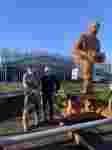
Ray Lonsdale’s statue of Tommy, at Seaham had a profound effect on me. Tommy, or using it’s real title of “One Minute Past Eleven” depicts a weary First World War soldier slumped and gazing ahead. Tommy represents how many troops felt when the war ended – we had ‘won’, but at what cost?

Employability / December 11th, 2023
Skills for a Fast Changing World- with the Cranfield Trust and their Patron HRH Princess Anne
What an amazing opportunity and experience! As an extension of the success of our project with the Cranfield Trust, Christine Thomas our CEO attended their event at the Freemason's Hall, Great Queen Street in London on the 6th December 2023, with their Patron HRH Princess Anne.

Wellbeing / May 23rd, 2025
Fundraising / May 23rd, 2025
The Key+ supporting Kye's Kick Off
Check out this article that The Key have shared about Kye's Kick Off! The Key are a charity who support groups to reach their potential by taking on the Key+ challenge. The Kye's Kick Off group have completed stage 1 of the Key+ challenge and received the cost of the pitch hire from The Key. Thank you for their support!